


Passion empowered
Polartec is marking the thirtieth anniversary of the formal launch of the brand by celebrating fabrics and garments that, since 1991, have changed what we wear when we go into the outdoors.
Performance textiles developer Polartec is running an initiative to celebrate the thirtieth anniversary of the brand’s launch. It has called the campaign ‘Peaking Since 91’. It wants to use the anniversary to highlight milestones of what it has called “an extensive history of fabric innovation” that includes “category-creating inventions that have empowered millions of passionate outdoor enthusiasts”.
Developments from down the decades that feature include, of course, PolarFleece, invented in the years leading up to the launch of the brand by then parent company, Malden Mills.
Combined efforts
Polartec president, Steve Layton, says the history of the brand and the Polartec company is one of transformation, “from a traditional mill into a performance textile innovator”. An important aspect of this transformation is its work with business partners, joint efforts that have resulted in “iconic fabrics and garments that changed what we wear when we go outside”.Malden Mills had already been manufacturing textiles in Massachusetts for 85 years before it introduced the Polartec brand; this commitment to working in partnership with people outside the business was also sewn into the fabric of the parent company. In fact, it was precisely this that led to the development of the PolarFleece fabric that helped give the brand its name. Patagonia founder, Yvon Chouinard, had long left his native New England for California, but he knew all about the textile heritage of Massachusetts and it was on Malden Mills’ door in the town of Lawrence that he knocked one day in 1981 to ask for help.
Mr Chouinard had with him prototypes he had been working on for a synthetic sweater for people who shared his passion for mountain climbing. He asked the team at Malden Mills to help make the fabric softer. This led to the invention of synthetic fleece, which led to Polartec becoming a brand and then a company in its own right. According to David Parkes, the founder of textile resource and garment production service Concept III, this was the moment that outdoor apparel, as a category in its own right, was born.
Natural flow
This commitment to combined working continues at Polartec today; the chief executive of Swedish outdoor brand Houdini, Eva Karlsson, shares it. She says her aim has long been to mimic nature in the clothing the company offers to skiers, cyclists, skaters, hikers, kayakers, climbers and everyone else who loves being active in the outdoors. For her, this means moving from linear to circular thinking, with everything “flowing naturally” and nothing going to waste. “We live on a planet that is amazing and beautiful,” Ms Karlsson says, “but we are consuming everything that makes life worth living. We are consuming at an ever-increasing rate.”
A good example of Houdini working successfully with others (in this case Polartec) to achieve this transition is the Mono Air project. Houdini launched its Mono Air Houdi in 2019 and won an ISPO Gold Award in early 2020 for the product. It uses Polartec’s Power Air fabric technology, made from circular mono material and engineered to reduce microfibre shedding by 80% compared to other premium mid-layer weight fabrics, while still retaining warmth. Polartec unveiled the new fabric at the end of 2018, saying it had achieved this breakthrough by encapsulating lofted fibres within a multilayer, continuous yarn fabric construction during the knitting process. The encapsulated air shelters the lofted fibres.
In 2020, Houdini and Polartec decided to make public all the details of what they had done in developing Mono Air. “We looked at design, innovation opportunities and engineering to create a much more resilient fabric,” Eva Karlsson explains. “We ended up with a more creative purpose, stronger product development in general and a better fabric that’s more durable. We asked ourselves: how do we waste as little fabric as possible? How do we achieve the functional details? How can this be beautiful?”
Beauty counts
On the questions about performance and beauty, she says that it would be unacceptable to compromise on performance or comfort in any effort to “go circular and sustainable”. In fact, to make such a compromise would be the opposite of being sustainable, she points out. Beauty counts, too, for a similar reason. If people love a garment, they will wear it time and time again. “We need to make products that people fall in love with and stay in love with,” the Houdini chief executive explains. “That promotes longevity.” It was because of this lack of willingness to compromise that it took until 2019 to launch Mono Air; discussions about it began in 2013. “A short-cut wouldn’t have helped us in the long run,” Ms Karlsson says. “We all benefit from doing things properly."
Recent developments in using recycled fibres in Polartec fabrics include a project with Italian cycling clothing brand Santini. It has renewed an existing partnership with the Union Cycliste Internationale (UCI) to produce the UCI World Champion Jersey for the next four years. It has committed to using 100% recycled fabric from Polartec. The manufacturer has been making fabrics that use recycled content for more than 25 years and claims to have saved more than 1.8 billion plastic bottles from landfill in that time.
The jerseys will use a recycled version of Polartec Power Dry, which offers what the fabric brand calls “advanced next-to-skin moisture management”. It uses a bi-component knit construction.
Under new ownership
Since 2019, Polartec has been part of Milliken & Company, which said at the time that the addition of a specialist performance fabric developer, particularly its outdoor and fleece textiles, would “round out” its existing portfolio of performance textiles for consumers, industrial workers and military personnel around the world.
According to Steve Layton, being part of this larger textile group enables Polartec to put forward “four product mandates”. The first of these is enhanced durability in its products. “Longevity is one of those areas that doesn’t get talked about enough,” the brand president says. “We are quick to talk about end-of-life but we forget to ask how long we expect products to last.” The company is looking closely at the options for what to do with garments made from its fabrics after consumers have finished with them. Chemical recycling and enzyme recycling are “becoming interesting”, Mr Layton says, but he says the solutions available today are not yet scalable. “We need a longer-lasting product until the technology is scalable and up and running,” he insists.
Next, he says Polartec products can now benefit from Milliken’s chemistry and research. He points to the “significant breakthroughs” the group has made in water repellency, for example. Third is an ongoing focus on fibre-shedding, with the necessary impact this makes on fabric construction and fibre choice in performance fabrics. It will also aim for, in its fourth mandate, total circularity, continuing to use recycled inputs to make products that are durable and can be recycled into raw materials that can then be made into a new product for the same use.
Outdoor adventures
As part of the Peaking Since 91 campaign, the brand has run a competition, asking outdoor enthusiasts to submit photographs of themselves, their friends and family members on their outdoor adventures. Entrants have the chance to win limited-edition products.
In Europe, Italian designer Leo Colacicco, the force behind fashion-brand LC23, has made two exclusive pieces for the competition winners. There is a fleece jacket called the LC23 X Polartec Peaking Since 91. A final grand prize comprises two LC23 X Polartec Peaking Since 91 armchairs made of the offcuts from the limited-edition fleece.
In North America, entrants have a chance to win garments from partner brands and grand prizes that include VIP ticket packages to music festivals including the High Sierra Music Festival, LOCKN’, Northwest String Summit, and Summer Camp Music Festival. The contest runs until the end of May; some lucky entrants have won prizes already.
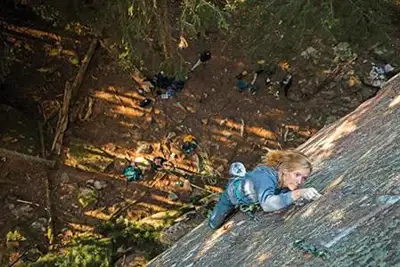
Worth waiting for. A climber puts Houdini clothing, made using Power Air fabric technology from Polartec, through its paces.
CREDIT: Houdini


