


Pushing the boundaries of seamless knitting
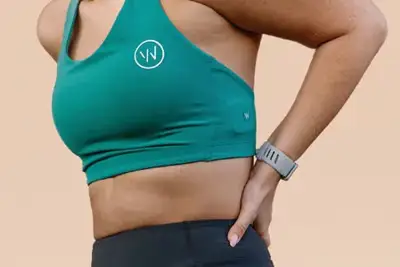
Embedded with smart tracking devices, bodywear and seamless knitting are expanding to new territories.
Natural performance and wellness are emerging as key drivers of demand, and seamless knitting is answering this call with next-generation fibres, smart textiles and digital precision in garment-making technology. The evolution of next-to-skin performance was the topic of the very first webinar jointly organised by Performance Days and Sportstextiles, who have created a new platform for innovation and knowledge sharing.
The notion of wellness has now gone beyond the spa, says Nichole de Carle, creative director and material innovation specialist, who is also Performance Days’ bodywear curator. It has not only expanded into skincare and food, it is also weaving its way into the textiles we wear next to the skin. “Consumers are monitoring their sleep and people who are active integrate recovery into their routines. So, the question now is how can textiles, which we wear against the skin 24/7, address these new demands?” she asks.
For Jillian Samis, Tefron’s head of marketing and design, wellness is an integral part of everyday life. This global manufacturer of seamless knitted apparel is actively seeking to address the many facets of these new consumer expectations. “Our research into recovery sleepwear was sparked by the use of Whoop health trackers, which also monitor sleep,” she says. Taking silk pyjamas as a starting point, the team added infrared-reflecting yarns to promote recovery by activating blood flow. “This choice of fibres accompanies a wellness journey, speeds up muscle recovery and complements the smart tech devices that people are increasingly wearing,” she points out.
A new material intelligence
German high-end wool spinner Südwolle Group is also exploring next-generation fibre blends. Its alginate fibre-merino wool blend yarns won a Performance Days innovation award last March. The algae fibre is derived from brown seaweed and is the result of a collaboration with a Chinese university. “The algae yarn brings the benefits of strong moisture absorption and a very soft feel against the skin. In addition, perhaps surprisingly, it has a high fire-resistance. The pure alginate fibre has a limiting oxygen index (LOI) of 45%,” says Lukas Vogl, Südwolle’s marketing specialist and head of Südwebs, its innovation hub. “With these innovation projects, our goal is to expand the industry’s toolbox and offer a platform for customers willing to explore new concepts.”
An enhanced, performance silk development will be showcased at the next Performance Days show (Munich, October 13 and 14), teases Ms de Carle. “We are working on a project that pairs silk with graphene and for the new cellulosics forum that will be inaugurated at the show.” The silk fibres provide breathability and the graphene delivers recovery. These properties have been tested and validated, she says. “This introduces a new way to wear silk for an active lifestyle.”
Reacting to the bad buzz surrounding polyester, now a synonym for cheap or fake, Lukas Vogl argues that rather than pitting natural fibres against synthetics ones, a new material intelligence is needed. This is a view shared by Jillian Samis: “When you blend synthetics with natural fibres, you get the best of both worlds”. Zoë Rosenberg, Whoop’s lead materials developer for accessories and apparel, agrees that when making fibre decisions, you need to ask yourself what the product is going to be used for: is it for performance or is it for fashion?
Whoop makes fitness and health wearables that can be worn on the wrist, as is the custom, or embedded in clothing, to give users more flexibility in how they use the device. The brand’s apparel and accessories range includes smart nooks for a wearable but removable pod, keeping the device in place and positioning it to capture quality data. Whoop currently offers a selection of ‘pod-enabled’ items, from brassieres and underwear to shorts and tee-shirts. It has chosen seamless knitting as the best solution for comfort and performance. “We find seamless knitting useful because you can pattern in functionality as well as varied levels of compression. Our device requires a certain amount of compression to avoid motion artefacts,” says Ms Rosenberg. Approved locations for the Whoop pod include the biceps, the side torso and upper glutes. A more compressive and targeted structure is knitted at these locations to keep the pod close to the skin and prevent excess movement while avoiding compression throughout the entire garment.
Seamless knitting is a high-tech, zero-waste manufacturing method that has become the industry standard for baselayers, as it enables ventilation, compression, wicking and thermoregulating zones to be engineered into a single garment. “With seamless, you can knit down to the pixel, you can combine different fibres and gauges, while avoiding cutting and sewing,” says Ms Samis. Tefron’s new recovery sleepwear is designed to be worn close to the skin allowing the infrared-reflecting yarn to optimally return energy to the body. However, seamless does not necessarily imply tight-fitting. “This type of knitting is historically associated with fitted leggings and sports bras. But we are investigating hybrid constructions that combine seamless with cut-and-sewn knits to create innovative two-in-one solutions,” she notes. Südwolle is also working on a project that challenges the notion that seamless clothing has to be fitted. The results of this research will be presented at Performance Days. A space to watch.
New markets
In addition to hybrid constructions and looser shapes, seamless knitting is moving into new markets, such as running and hiking. “There’s a real opportunity for seamless outdoor clothing, and I am not sure consumers have picked up on this,” says Ms De Carle, who believes that seamless can do much more than many people previously thought. She mentions Tefron’s Terrain Collection as a clever take on this new trend. “It combines natural fibres with a mosquito-repellent yarn and is designed for performance. You can climb in these seamless outdoor pieces.” Ms Samis adds that Tefron has also developed performance wool tops with UV protection and ventilation zones that “can easily be worn in everyday life”. The head of marketing and design for Tefron also notes that seamless is inexplicably absent from swimwear, despite being ideally suited to the manufacturing technique. “We could engineer swimwear with compression zones and built-in support for the chest.”
Travel wear could benefit from seamless constructions as well. “When considering comfort and how a garment is constructed, there is definitely space to explore. It may not be conventional technical performance, but it does perform for the user,” she adds. These new directions recall the former buzzy athleisure trend. While the term may be dated, all agree that the concept is not. “Many of the garments we see today are athleisure in disguise,” says Mr Vogl. “They may be street casual or business casual, but they have the feel of athleisure: clothing that feels and looks good. In my mind, the properties have evolved even if the style has been left behind.” Ms de Carle sums it up: “Brands have normalised performance beyond exercise. Consumers have moved on from athleisure. It is not dead in the water, but we are now looking to curate a well-edited wardrobe. We are dressing for sleep, commuting, work, sports and travel. The thread that connects all of these is wellness.”
Whoop, the maker of health and performance tracking devices, designs apparel with locations to house a wearable pod during workouts. The company claims that upwards of 3 million people wear the screenless device worldwide. Credit: WHOOP


