


Reo-Eco one ups T2T
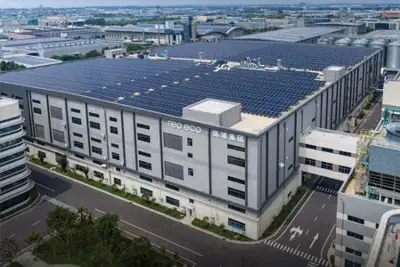
In August, Reo-Eco inaugurated a 10,000-tonne textile-to-textile recycling facility in China marking a new milestone in closing the loop from post-consumer waste to virgin-grade rPET.
Advanced textile-to-textile recycling is becoming a reality, and with it the promise of making polyester textiles infinitely recyclable. Unlike mechanical or thermomechanical processes, depolymerisation techniques using solvents or enzymes are said to produce high-grade rPET. Several companies are now moving from demonstration stage to industrial production, with factories under construction at Reju, Circ and Carbios in France, Gr3n in Spain and Syre in Vietnam.
The real action in textile-to-textile recycling is in fact already up and running in Asia. China’s Jiaren operates a 20,000-tonne facility in Shaoxing through a joint-venture with Teijin using a technology originally developed by the Japanese company. Another production line is planned in a joint-venture with Thailand-based Indorama Ventures, with an announced goal of achieving an annual spinning capacity of 100,000 tonnes of textile-recycled PET. In Australia, Blocktexx runs a 10,000-tonne recycling factory for polycotton textile waste in Loganholme, Queensland. In China, Reo-Eco inaugurated a 10,000-tonne facility in Huai’an, Jiangsu, this past August. Its long-term vision is to increase this capacity to 100,000 tonnes in 2027, and 1 million tonnes in 2030.
The breakthrough Reo-Eco claims is that its BioCulus process uses enzymes rather than solvents to depolymerise polyester. Instead of high heat and pressure, enzymatic recycling takes place at temperatures of 60 to 65°C, at atmospheric pressure, and is powered by sugar. These conditions result in a lower environmental impact than chemical recycling and require a non-toxic environment to enable the enzymes to work and remain active. “This is the beauty of enzymatic recycling,” says Stefan Edkvist, Reo-Eco’s business development director. “We are continually filtering out those enzymes that are either too slow or too fast, to keep the best ones for the process.” This has enabled the company to improve their productivity. “Our enzymes are getting stronger and more efficient. Last year, the depolymerisation process took 12 hours, this year, we have reduced that to six to seven hours.”
Another claimed advantage of this recycling method is that the enzymes are engineered to target a specific polymer. “By nature, our enzyme focuses on PET and breaks it down into its monomers. Dyes and other chemicals are filtered out. Non-polyester fibres such as cotton, wool and others are filtered out too,” Mr Edkvist tells Sportstextiles. These unaltered materials can then be treated by other recyclers. “We send them back to our sorter who recycles that waste into outdoor flooring.”
Reo-Eco produces its own enzymes that convert polyester back into purified terephthalic acid (PTA) and monoethylene glycol (MEG). Mr Edkvist says that the company’s R&D team includes 18 PhDs.
The BioCulus process requires textiles containing a minimum of 90% polyester. The company sources post-consumer waste from two collector-sorters located an hour away from the factory. It has also partnered with brands to take in their offcuts and unused bolts of fabric. “We have spent the last three years securing feedstock,” he says, adding that a third collector-sorter has now joined the ecosystem.
At the recycling plant, the sorted textile waste undergoes an additional AI-powered sorting to weed out any non-polyester items that might have slipped into a batch. Mr Edkvist insists on the highly controlled nature of the system in place at Reo-Eco. “There are more than 1,000 checkpoints throughout the process. If something goes wrong, we need to know fast and fix the problem, no matter what stage it occurs at: sorting, shredding, reactors, filtration, purification or polymerisation.” All of these checkpoints are automated, meaning that once the feedstock arrives at the plant, no further manual operations are required. These multiple screenings also enable Reo-Eco to claim that BioCulus yields a very pure form of polyester that is higher in quality than standard virgin petrochemical polymers. “This naturally came as a surprise to us when we compared the two. We do not know the reason, but the fact remains. Our process is carried out with great attention to detail,” he says.
Since depolymerisation reverts a polymer to its original building blocks, it is difficult to prove the presence of recycled content. Thanks to its integrated production and careful screening, Reo-Eco has obtained GRS certification for all its products (filament and fabrics). The textile waste feedstock is measured physically. Mr Edkvist admits that it is impossible to be 100% sure with post-consumer waste. To back its claims, Reo-Eco embeds a DNA tracer in the polymer during the BioCulus process.
A near perfect score
Reo-Eco says it recovers 99% of the polyester input. A near perfect score. At a panel talk held at Première Vision Paris last September, Emmanuel Robin, textile market manager for Carbios, a French company that has also patented an enzymatic recycling process for PET and polyester, claimed a recovery rate of 95%. Blocktexx, which uses a different process called Separation of Fibre Technology (S.O.F.T.), says it reclaims 93% of its polyester and cotton input.
A vertically integrated manufacturer, Reo-Eco produces T2T rPET filaments from the chips and makes knitted and woven fabrics. It also operates a bottle flake recycling facility, with an annual capacity of 100,000 tonnes. This bottle flake rPET helps to bridge the price gap, as Reo-Eco offers fabrics made from a blend of 80% post-consumer bottle flakes and 20% post-consumer textile waste. This offers brands a way to gradually increase uptake of T2T rPET in their ranges, by offsetting the higher cost of textile-to-textile rPET. Mr Edkvist expects T2T rPET to be available at the same price as bottle flake rPET by the end of next year. “But whether bottle flake or T2T, we need to recycle our waste,” he points out.
The business development manager of Reo-Eco is also intent on reducing other apparel industry impacts, specifically those related to dyeing. This is a mission he first put in practice at SpinDye, a Swedish company specialising in dope-dyed yarns, that avoid traditional wet dyeing processes. The first shade Reo-Eco is offering in its FixDye range of dope-dyed yarns is a (blue) black. He is confident that the vision once pursued by SpinDye will now be realised on a much larger scale by Reo-Eco.
“With BioCulus, we went from 500 kg to 10,000 tonnes. This is a true breakthrough for the industry, as it reduces the need for virgin polymers.” He says that what is now critically needed are high-volume customers.
Reo-Eco’s facility in Huai’an operates in part of on renewable energy thanks to 180,000 square-metres of solar panels. Credit: Reo-Eco


