France’s environmental tool ‘seriously underestimates’ polyester impact
An official tool that the French government launched last year to provide transparency about product environmental footprint has come under fire for presenting synthetic fibres in a more favourable light than natural ones.
Analyst, author and specialist in fashion sustainability issues Veronica Bates Kassatly has said the tool, Ecobalyse, “seriously underestimates” the environmental impact of polyester and is using data that is “antiquated or unrepresentative”.
Ecobalyse officially launched in October 2025 with the aim of helping consumers make informed choices about the clothing they buy. It takes into account a series of environmental indicators, including carbon emissions and water use, and applies normalisation and weighting criteria to make the data comparable.
The tool also takes into account product durability, pollution from microfibres and end-of-life options to come up with a final score. The higher a product’s score, the greater its environmental impact.
It gives a score of 1,168 points for a T-shirt or polo shirt made from organic cotton. If you change the setting for the raw material from organic cotton to polyester, the score drops to 1,035 points. This suggest a polyester T-shirt has a 12.8% lower environmental impact than one made from organic cotton.
Ms Bates Kassatly said she had recently worked with former executive director of the International Cotton Advisory Committee, Dr Terry Townsend, to carry out a detailed analysis of the impact of polyester. She added that a report of this analysis should become available in the next few months.
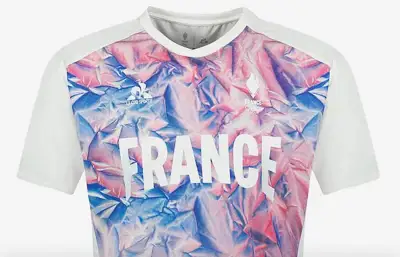
Image: Le Coq Sportif/Intersport.