Cotopaxi reports environmental & social stewardship
US-based outdoor brand Cotopaxi has released its impact report for 2025. Founded in 2014 and headquartered in Salt Lake City, the B. Corp company began mapping its greenhouse gas emissions across Scopes 1, 2 and 3 in 2023. These show little variation in 2025, as it is still in the early phase of this mission. The report states that carbon intensity per unit produced amounted to 12.5 kg CO2e, and under 1% per dollar revenue last year.
To support industry efforts to lower its climate impact, the brand is a member of the Outdoor Industry Association (OIA) Co-Lab which offers suppliers an open-source Clean Heat Transition Tool to help them evaluate ways to phase out coal. In the Philippines, where its largest factory is located, it works with Allotrope, a clean energy consultancy, to support local decarbonisation measures. In its own facilities, Cotopaxi is transitioning to renewable power.
On materials, the brand continues to shift progressively towards ‘preferred’ raw materials (20.2% of all materials used in 2025), and is phasing out 3.9% of supplies that do not meet its targets. No intentionally added PFAS is present in the brand’s collections since 2024, it said.
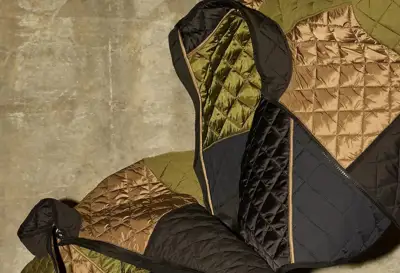
Known for its use of deadstock, Cotopaxi consumed 840,603 yards of leftover materials last year, which it said equates to 480 miles. In addition to the Del Dia range that makes use of deadstock, the brand has introduced a new Contiguo tote bag designed specifically to reintegrate unused fabrics into limited edition drops.
Ecodesign principles are also growing, as seen in a new luggage range, Coraza, in which the zipper, a common weak point in suitcases, has been replaced with repairable mechanical latches. Repair services, as part of its Guaranteed for Good programme, took care of fixing 1925 items last year. These involved sewing (39%), gear tape (36%) and components or hardware (26%).
The Cotopaxi Foundation, the brand’s philanthropic arm, directs roughly 1% of the company’s revenues to three core pillars, promoting education, health care and improved livelihoods. It also allocates community grants on an ad hoc basis for partnerships at retail store level, brand collaborations and humanitarian and disaster relief. The Foundation distributed $1.2 million in 2025.
Photo shows Cotopaxi Contiguo collection made entirely from deadstock.